Loading...

Festival Guide
Japanese Festivals - Matsuri
Experience the energy, tradition, and beauty of Japan's iconic festivals
Japan hosts over 300,000 festivals (matsuri) each year, from small neighborhood celebrations to massive events attracting millions. Rooted in Shinto and Buddhist traditions, these festivals honor deities, celebrate seasons, and bring communities together. Here are 20 of Japan's most spectacular festivals that every visitor should experience.
Festival Calendar
Jan
Toka Ebisu
Feb
Sapporo Snow Festival
Yokote Kamakura
Mar
-
Apr
Takayama Spring
Kanamara Matsuri
May
Kanda Matsuri (odd years)
Jun
-
Jul
Gion Matsuri
Tenjin Matsuri
Hakata Yamakasa
Sumida Fireworks
Nachi Fire Festival
Aug
Nebuta Matsuri
Hirosaki Neputa
Awa Odori
Sendai Tanabata
Sep
Kishiwada Danjiri
Oct
Takayama Autumn
Nagasaki Kunchi
Nikko Toshogu
Nov
-
Dec
Chichibu Night Festival
Festival Tips for Visitors
What to Wear
Many festivals rent yukata (casual kimono). Wear comfortable shoes - you will walk a lot. Some festivals allow visitors to wear happi coats and participate.
Food & Drink
Festival food stalls (yatai) are a highlight. Try yakisoba, takoyaki, kakigori (shaved ice), and candied apples. Bring cash - most stalls do not accept cards.
Getting There
Book accommodation and transport months ahead for major festivals. Arrive early for good viewing spots. Use public transport as roads close during parades.
Etiquette
Be respectful during religious ceremonies. Ask before photographing people. Do not touch the floats unless invited. Follow crowd control instructions.

Winter


さっぽろ雪まつり
Sapporo Snow Festival
Sapporo, HokkaidoFebruary
One of Japan's largest winter events, featuring over 200 stunning snow and ice sculptures displayed across three sites in Sapporo. The main site at Odori Park stretches 1.5km with massive illuminated sculptures that attract over 2 million visitors annually.
Highlights
- Giant snow sculptures up to 15 meters tall
- International snow sculpture competition
- Night illuminations transform the sculptures
- Susukino ice sculpture street with frozen seafood displays

Summer


祇園祭
Gion Matsuri
KyotoJuly (full month)
Japan's most famous festival, dating back over 1,100 years. The highlight is the Yamaboko Junko parade on July 17th, where 23 massive, ornately decorated floats (some weighing 12 tons) are pulled through Kyoto's streets. The festival spans the entire month of July with various events and rituals.
Highlights
- Yamaboko Junko parade with towering floats
- Yoiyama evening festivals (July 14-16)
- Street food stalls line Shijo-dori
- Traditional music and dance performances
- Each float has centuries of history and unique artwork

Summer


ねぶた祭
Nebuta Matsuri
AomoriAugust 2-7
Spectacular illuminated float festival featuring enormous paper-and-wire lantern floats (nebuta) depicting warriors, gods, and mythical figures. Dancers called haneto jump and chant 'Rassera! Rassera!' through the streets, and anyone in traditional haneto costume can join the parade.
Highlights
- Giant illuminated warrior floats up to 9 meters wide
- Anyone can join as a haneto dancer
- Final day features a float parade and fireworks over the bay
- UNESCO Intangible Cultural Heritage
- Nightly parades from 7pm draw massive crowds

Summer

阿波おどり
Awa Odori
Tokushima, ShikokuAugust 12-15
Japan's largest dance festival with over 400 years of history. The saying goes: 'The dancing fool and the watching fool are both fools, so why not dance?' Over 100,000 dancers perform in organized groups (ren) through the streets, while 1.3 million spectators cheer them on.
Highlights
- Over 100,000 dancers in coordinated groups
- Both traditional and creative modern dance styles
- Anyone can join the 'niwaka-ren' (impromptu groups)
- Bon Odori tradition celebrating ancestors
- Music features shamisen, taiko drums, and flutes

Summer

天神祭
Tenjin Matsuri
OsakaJuly 24-25
One of Japan's three greatest festivals, honoring Sugawara no Michizane, the deity of learning. The highlight is the river procession (Funatogyo) where over 100 illuminated boats float down the Okawa River, followed by a spectacular fireworks display of 5,000 fireworks.
Highlights
- River procession with 100+ illuminated boats
- 5,000 fireworks over Okawa River
- Land procession with 3,000 participants in period costume
- Over 1,000 years of history
- Traditional gagaku court music performances

Spring

高山祭
Takayama Matsuri
Takayama, GifuApril 14-15 / October 9-10
Held twice yearly, this festival features exquisite yatai floats designated as Important Tangible Folk Cultural Properties. The spring festival at Hie Shrine and autumn festival at Hachiman Shrine showcase elaborate mechanical puppets (karakuri) and stunning night parades with lantern-lit floats.
Highlights
- UNESCO Intangible Cultural Heritage
- Karakuri puppet performances on ornate floats
- Night parade with 100+ lanterns on each float
- Held in one of Japan's best-preserved old towns
- Spring and autumn versions each have unique floats

Summer

隅田川花火大会
Sumida River Fireworks
TokyoLate July
Tokyo's oldest and most prestigious fireworks festival, dating back to 1733. Over 20,000 fireworks are launched from two sites along the Sumida River, attracting nearly 1 million spectators. The competition between pyrotechnic companies produces some of Japan's most innovative fireworks.
Highlights
- Over 20,000 fireworks in 90 minutes
- Two launch sites for continuous viewing
- Visible from Tokyo Skytree observation deck
- Rooftop bars and restaurants offer premium views
- Nearly 300 years of tradition
Autumn
岸和田だんじり祭
Kishiwada Danjiri Festival
Kishiwada, OsakaSeptember
One of Japan's most thrilling and dangerous festivals. Massive wooden floats (danjiri) weighing 4 tons are pulled through narrow streets at high speed, with the dramatic 'yarimawashi' - sharp turns at intersections where the float's momentum nearly tips it over. Brave men dance on the roof throughout.
Highlights
- 4-ton floats racing through narrow streets
- Dramatic yarimawashi cornering technique
- Roof riders performing daring acrobatics
- Over 300 years of history
- 34 danjiri floats participate over two days
Winter
秩父夜祭
Chichibu Night Festival
Chichibu, SaitamaDecember 2-3
One of Japan's three greatest float festivals, and the grand finale of the festival calendar. Six elaborately carved and gilded floats are paraded through the streets accompanied by taiko drums and festival music, culminating in a dramatic ascent up a steep slope while fireworks explode overhead.
Highlights
- UNESCO Intangible Cultural Heritage
- Spectacular winter fireworks display
- Six massive floats pulled up a steep hill
- Traditional kabuki performances on float stages
- Over 300 years of tradition
Summer
博多祇園山笠
Hakata Gion Yamakasa
FukuokaJuly 1-15
A 780-year-old festival culminating in the 'Oiyama' race at 4:59am on July 15th, where teams of men carry 1-ton floats (kakiyama) through 5km of Hakata's streets in a fierce race against the clock. Static display floats (kazariyama) up to 15 meters tall are displayed throughout the city during the festival.
Highlights
- Early morning race with 1-ton floats carried on shoulders
- Display floats up to 15 meters tall throughout the city
- UNESCO Intangible Cultural Heritage
- 780 years of unbroken tradition
- Teams compete for fastest completion time
Spring
神田祭
Kanda Matsuri
TokyoMid-May (odd years)
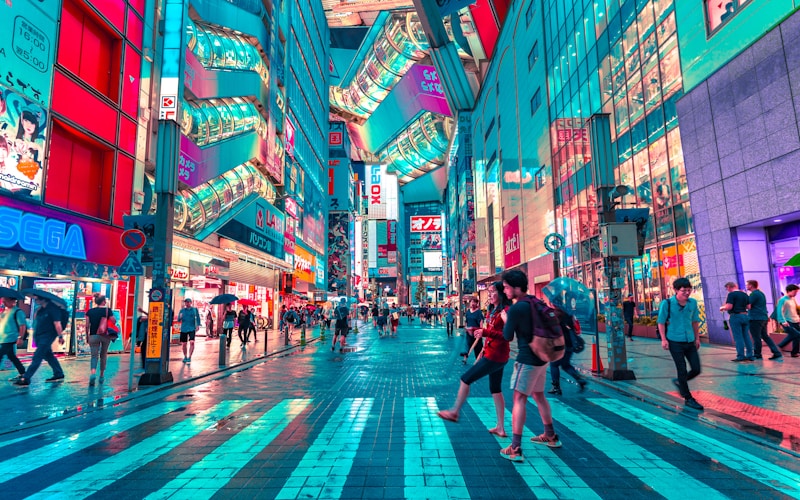
One of Tokyo's three great festivals held at Kanda Myojin Shrine, one of the oldest shrines in the capital. Held in full scale only in odd-numbered years, the festival features a grand procession of over 200 portable shrines (mikoshi) carried through the streets of Akihabara, Nihonbashi, and Kanda.
Highlights
- Over 200 mikoshi parading through central Tokyo
- Procession passes through Akihabara's electric town
- One of Edo's (old Tokyo) three great festivals
- Elaborate costumes from the Edo period
- Held since the early 1600s during the Tokugawa era

Summer

仙台七夕まつり
Sendai Tanabata Matsuri
Sendai, MiyagiAugust 6-8
Japan's most famous Tanabata (Star Festival) celebration, transforming Sendai's shopping arcades into a tunnel of spectacular hanging decorations. Over 3,000 handmade streamers (fukinagashi) in vivid colors cascade from bamboo poles, each created by local businesses and taking months to prepare.
Highlights
- 3,000+ handmade hanging streamers up to 5 meters long
- Shopping arcades transformed into colorful tunnels
- Write your wish on a tanzaku paper strip
- Eve festival features a massive fireworks display
- Over 2 million visitors each year

Winter
横手かまくら祭り
Yokote Kamakura Festival
Yokote, AkitaFebruary 15-16
A magical winter festival where hundreds of kamakura (snow igloos) are built throughout the city. Inside each kamakura sits a small altar to the water deity. Children invite passersby in for amazake (sweet rice wine) and mochi. At night, hundreds of miniature kamakura along the riverbank create an ethereal candlelit landscape.
Highlights
- Hundreds of large snow igloos you can enter
- Children offer amazake and mochi inside kamakura
- Miniature candlelit kamakura along the Yokote River
- Over 450 years of history
- Magical nighttime illumination
Summer
那智の火祭り
Nachi Fire Festival
Nachikatsuura, WakayamaJuly 14
One of Japan's most visually dramatic festivals held at Kumano Nachi Taisha, a UNESCO World Heritage Site. Twelve massive torches (each 50kg and 6 meters tall) are carried down the 133 stone steps of Japan's tallest waterfall (133m) by white-robed priests, symbolizing the purification of the deities.
Highlights
- Giant torches carried down Japan's tallest waterfall
- UNESCO World Heritage setting at Kumano Nachi Taisha
- Sacred fire ritual dating back over 1,400 years
- White-robed priests carrying 50kg flaming torches
- Combination of fire, water, and ancient forest
Summer
弘前ねぷたまつり
Hirosaki Neputa Matsuri
Hirosaki, AomoriAugust 1-7
Often compared to its neighbor Aomori Nebuta, Hirosaki's Neputa features fan-shaped illuminated floats rather than three-dimensional ones. Over 80 neputa floats depicting warriors and beautiful women are paraded through the castle town streets, accompanied by the haunting 'Ya-Ya-Do!' chanting.
Highlights
- Fan-shaped illuminated floats unique to Hirosaki
- Over 80 floats in the grand parade
- Important Intangible Folk Cultural Property
- Beautiful castle town setting
- Distinctive Ya-Ya-Do chanting by participants
Winter
十日戎
Toka Ebisu
Osaka (Imamiya Ebisu Shrine)January 9-11
Osaka's most beloved New Year festival dedicated to Ebisu, the god of business prosperity. Over a million people visit Imamiya Ebisu Shrine to buy lucky bamboo branches (fukuzasa) decorated with gold coins, sea bream, and other good-luck charms to ensure business success in the coming year.
Highlights
- Over 1 million visitors in 3 days
- Lucky bamboo branches (fukuzasa) for business prosperity
- Festive Tai (sea bream) displays
- Shrine maidens attach lucky charms to your branch
- Street stalls stretch for over 1 kilometer
Spring
かなまら祭
Kanamara Matsuri
Kawasaki, KanagawaFirst Sunday in April
A unique and internationally famous fertility festival at Kanayama Shrine. Originally a prayer for protection from sexually transmitted diseases by sex workers in the Edo period, it has evolved into a colorful celebration of fertility, relationships, and sexual health awareness. Now a major fundraiser for HIV research.
Highlights
- Unique fertility-themed portable shrines
- International media attention and visitors
- Fundraiser for HIV/AIDS research
- Over 400 years of history
- Colorful themed food and souvenirs
Autumn
長崎くんち
Nagasaki Kunchi
NagasakiOctober 7-9
A 390-year-old festival at Suwa Shrine showcasing Nagasaki's unique blend of Japanese, Chinese, and Dutch cultural influences. Famous for its exotic dance performances including the Ja-odori (dragon dance) with a 20-meter-long dragon, and the dramatic Kokkodesho where a massive 1-ton ship float is thrown into the air.
Highlights
- 20-meter dragon dance (Ja-odori) with Chinese origins
- 1-ton ship float tossed into the air (Kokkodesho)
- Reflects Nagasaki's multicultural trading history
- Important Intangible Folk Cultural Property
- Dutch and Chinese influenced performances
Autumn
日光東照宮秋季大祭
Nikko Toshogu Autumn Festival
Nikko, TochigiOctober 16-17
A grand samurai procession at the UNESCO World Heritage Nikko Toshogu Shrine, recreating the funeral procession of Tokugawa Ieyasu, founder of the Tokugawa Shogunate. Over 1,000 participants in Edo-period samurai armor, accompanied by mounted warriors and portable shrines, march through Nikko's ancient cedar avenue.
Highlights
- 1,000+ participants in full samurai armor
- Recreation of Tokugawa Ieyasu's historic procession
- UNESCO World Heritage shrine setting
- Yabusame (horseback archery) demonstrations
- Ancient cedar-lined avenue backdrop
UNESCO Intangible Cultural Heritage
Several Japanese festivals are recognized by UNESCO as Intangible Cultural Heritage, preserving traditions that have been passed down for centuries.
Hakata Gion Yamakasa
Fukuoka
Registered 2016
Chichibu Night Festival
Saitama
Registered 2016
Takayama Matsuri
Gifu
Registered 2016